

The new tax incentives in Turkey and what they mean for investors and the real estate market?
29.06.2026, from the Stonehard Team
- What the new tax incentives include
- Who can benefit from them
- Why Istanbul is the focus of the new strategy
- What this means for the real estate market
- Urbanization and the earthquake factor
- The new cycle: a more selective but stable market
- Conclusion
Turkey has made a strong bid to become one of the most competitive jurisdictions for international business, capital, and high-net-worth individuals.
In April 2026, the country announced a large package of tax incentives aimed at attracting foreign investors, international companies, entrepreneurs, and professionals considering relocating or expanding their operations in the region.
This move comes at a time when global uncertainty, geopolitical conflicts, and a changing economic environment are causing more capital to be redirected to more stable, flexible, and favorable destinations. It is in this context that Turkey is increasingly positioning itself as a regional center for investment, business, and wealth preservation.
What the new tax incentives include
The new package of measures focuses on several key areas.
Among the most discussed proposals is a 20-year tax exemption on foreign-sourced income for individuals relocating to Turkey who have not been Turkish tax residents in the last three years. This measure is complemented by a fixed inheritance tax of 1% for individuals under this regime.
In practice, this means that under certain conditions, income generated outside Turkey will not be taxed in the country for a period of two decades. Taxation would apply to income earned within Turkey.
In parallel, incentives for businesses are introduced. These include up to 100% tax exemption for the export of services from high-value sectors such as software, gaming, medical tourism, and other rapidly growing industries.
For export-oriented manufacturing companies, a corporate tax rate of 9% is provided, which is significantly below standard levels in many European countries and creates a strong incentive for industrial investments.
Who can benefit from them
The measures target several main groups.
First are Turkish citizens living abroad who are considering returning to the country. For them, the new regime can become a serious incentive to transfer part of their life, capital, or business back to Turkey.
The second group consists of foreign citizens, entrepreneurs, and professionals who see Turkey as an opportunity for permanent residence, citizenship, or establishing a regional base for their activities.
The third group includes high-net-worth individuals whose main income and assets are outside Turkey but who are seeking a more tax-favorable, strategically located, and dynamically developing jurisdiction.
Why Istanbul is the focus of the new strategy
The city is the economic heart of Turkey, a link between Europe, the Middle East, and Asia, and one of the largest megacities in the region.
With the development of Istanbul Financial Center, the country aims to attract not only capital but also management structures, international companies, financial institutions, service centers, and businesses operating in multiple markets simultaneously.
This is an important change. Turkey does not aim solely to be a consumer market or a tourist destination. The country clearly states its ambition to become a regional hub for capital management, investment, services, and production.
What this means for the real estate market
Such tax incentives usually have a direct and indirect effect on the real estate market.
When a country actively starts attracting international entrepreneurs, investors, and high-income individuals, this naturally increases interest in quality residential properties, premium projects, offices, serviced apartments, and well-located assets in the most liquid areas.
In the case of Turkey, the first and strongest effect will most likely be felt in Istanbul. The city is already one of the most active real estate markets in the country, and with a new influx of international capital, attention will be mainly focused on quality projects with good locations, sustainable concepts, and reliable investors.
Urbanization and the earthquake factor
Another important driver of the market is the process of urban transformation.
After the severe earthquake in 2023, demand for new construction, earthquake-resistant buildings, and modern gated communities has increased significantly. Buyers have started paying much more attention to construction quality, safety, infrastructure, and the reputation of the investor.
This is one of the reasons why the premium segment in Istanbul remains more resilient than other parts of the market. Quality projects in good areas continue to attract interest, while weaker or compromised projects sell more slowly.
The new cycle: a more selective but stable market
Between 2024 and 2026, the market began to normalize. Interest rates on loans in Turkish lira increased, mortgage financing became more difficult, and foreign purchases declined compared to the peak in 2022.
However, it is important to note that this does not mean a collapse. Rather, the market is entering a healthier and more selective phase.
Good projects and the right locations continue to have potential, while mediocre offerings now face more serious competition. Buyers increasingly look not only at price but at the overall value of the property – construction quality, access to metro and transport, urban environment, builder reputation, and long-term potential for rental income or capital gain.
Istanbul is not a typical European market. There, real estate often serves several roles simultaneously – residence, protection against inflation, currency hedge, investment asset, and means of wealth preservation.
Conclusion
Turkey is making a clear effort to position itself as one of the most attractive regional destinations for international capital, business, and high-net-worth individuals.
The new tax incentives could prove to be an important catalyst for the next stage of the country's development, and Istanbul will likely be the first market where this effect will be most noticeable.
For the real estate market, this does not mean unconditional growth everywhere. Rather, it means a more selective, mature, and higher-quality market in which the right locations and good projects will continue to stand out.
For well-informed investors, the current period may prove to be a strategic moment to enter the Turkish market – especially in Istanbul and the most promising regions of the country.
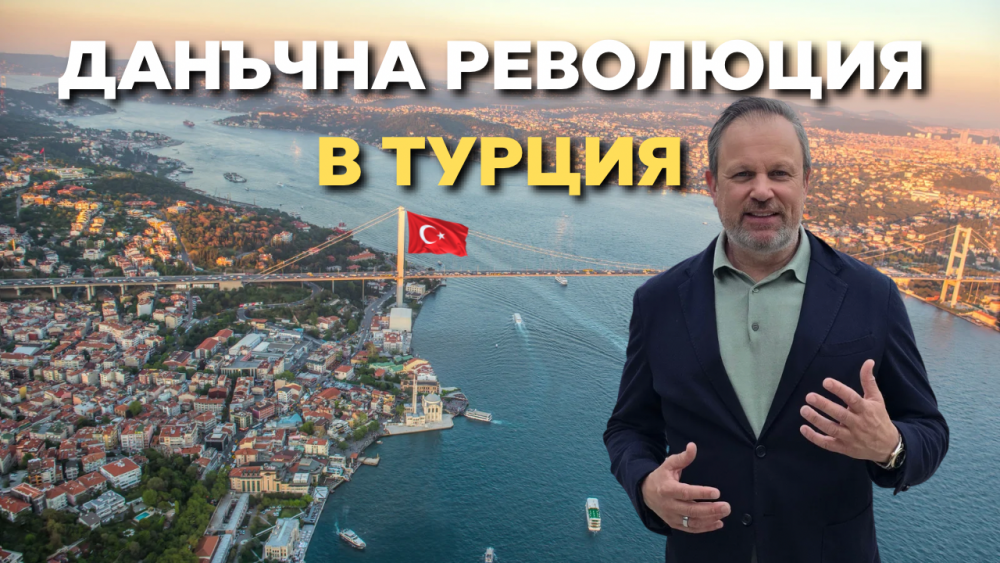
Watch the full episode in which Nikola Stoyanov presents more details about the new tax incentives in Turkey, their significance for international investors, and the potential impact on the real estate market in Istanbul.
© 2016-2026 Stonehard Marketing Ltd. All rights reserved.
STONEHARD™ and the logo are registered trademarks. All text, graphics and visualization materials on the site are our property or the property of our partners, and are subject to copyright, protected by the Law of the Republic of Bulgaria and the European Union. Their use by third parties is prohibited, except with our express written consent.
This website is operated by Stonehard Marketing Ltd, a company registered in Bulgaria (EU), VAT#BG131254299.
This website aims to present and promote new property development projects under construction, as well as individual units in newly completed buildings or residential complexes offered for sale. While our partners make every effort to ensure that the information provided is accurate and up to date, certain details may change or may not be fully accurate due to the dynamic nature of the new-build property market and ongoing construction processes.
For the most reliable and current information, please refer to official email communication with our partnering local real estate agencies by submitting an enquiry via the contact forms available on each listing. Our local partner agents will provide professional consultations to clients and investors interested in purchasing units in new-build developments or newly built resale properties featured on this website.
Subscribe to our newsletter
Follow us on social networks


Our contacts:
Office address:
Realtons Place
51G Cherni Vrah Boulevard, 7th Floor
Sofia 1407, Bulgaria
Working Hours (Central European Time):
Monday–Friday: 10:00 – 18:00 (CET)
Weekends and Public Holidays: Closed
The experts at Stonehard PREMIER regularly prepare original articles and analyses related to the new construction real estate market and opportunities for profitable investments in this business segment.